Missed Calls Are the Revenue Leak Most CEOs Never See
Most leadership dashboards track leads, cost per lead and close rate. Very few track the calls nobody answered. For service businesses, that blind spot can be one of the most expensive numbers in the company, because a missed call rarely shows up as a loss. The caller simply dials the next business on the list.
Why an unanswered call costs more than it looks
By the time a prospect picks up the phone, the business has usually already paid to earn that call through ads, a Google Business Profile, reviews or referrals. When the call goes to voicemail, that spend is wasted, and most new callers today do not leave a message.
Speed has long been tied to results. Harvard Business Review research in 2011 on 2,241 U.S. companies found that firms that responded to a lead within an hour were nearly 7 times as likely to qualify it as firms that waited longer. On the phone, the window is shorter still: the business that answers first often wins the job.
What CEOs should ask their teams to report
- Answer rate by hour and day. Most phone systems log missed calls. Gaps usually cluster at lunch, after 5 p.m. and on weekends.
- Missed calls that never called back. These are the leads that went somewhere else.
- Time to callback. A callback the next morning is often too late for a caller with an urgent problem.
- After-hours call volume. This shows whether coverage outside office hours is worth paying for.
The options for closing the gap
Companies have traditionally picked from three fixes: hire a receptionist, pay a per-minute answering service, or route calls to an owner’s cell phone. Each has trade-offs in cost, coverage and how well callers’ questions get answered.
AI receptionists have become a fourth option. These tools answer a business line in a natural voice, respond to common questions, book appointments and send the owner a summary of every call.
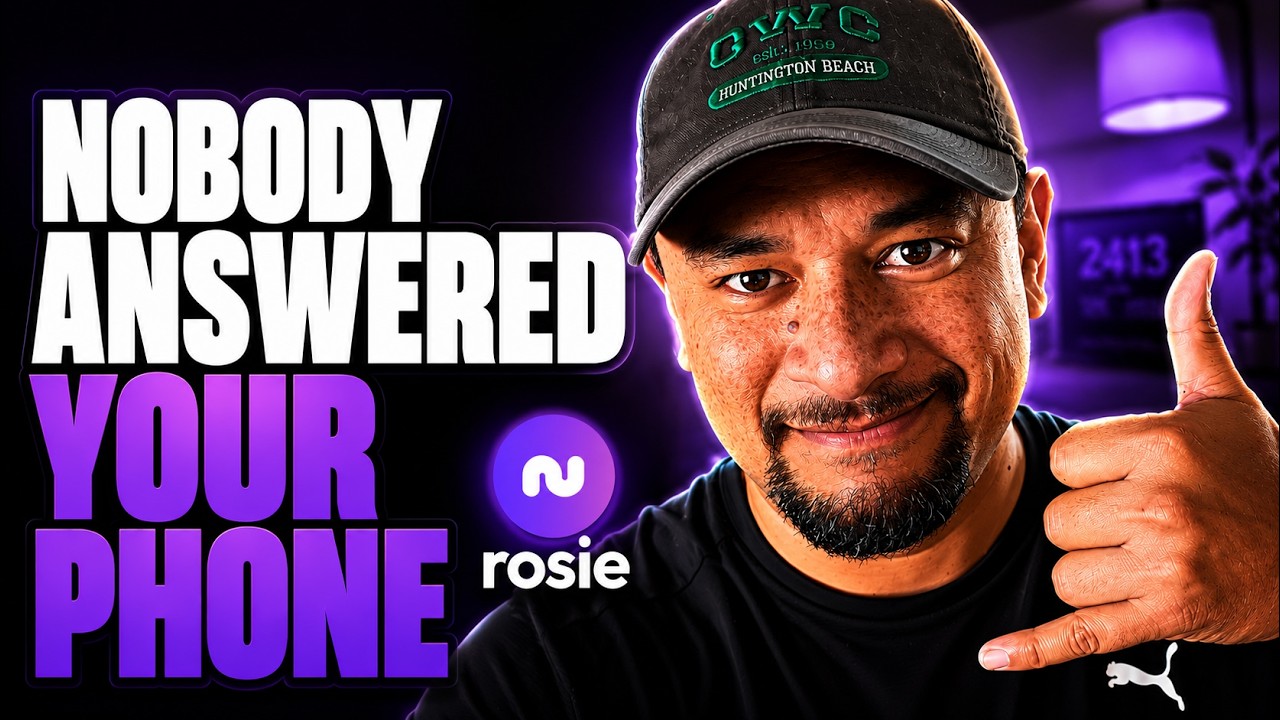
Rob Pene, founder of the Torrance, California growth consultancy Mission Driven Brand, set up one of these tools, Rosie, on camera and placed a live test call. In his Rosie AI receptionist review, he reports that setup took under five minutes, working from the business’s website. The AI answered on the first ring with no phone menu, and a text summary of the call arrived as soon as it ended.
According to Rosie’s published pricing as of October 2026, plans start at $49 a month for 250 minutes. Direct calendar booking and live call transfers begin on the $149 Scale plan, and a $299 Growth plan adds more minutes and onboarding support. All plans include a 7-day free trial.
What to weigh before buying
An AI receptionist is only as accurate as the information it is given. If a company’s website lists outdated hours or services, callers will hear outdated answers. Pene’s review also notes that Rosie had no independent user reviews on major software review sites as of October 2026, and that its pricing page does not list an overage rate.
The financial case is straightforward to test. At $588 a year for the starter plan, a business whose average customer is worth $1,000 recovers the cost by catching a single additional customer. For leadership teams, the bigger step may simply be measuring missed calls at all.
Disclosure: Mission Driven Brand is affiliated with this publication. Rob Pene earns a commission when readers sign up for Rosie through links in his review.